Just finished Basma Abdel Aziz‘s second novel Here is a Body, and thought I’d get my thoughts down here before they fade with the return to teaching and all the other stuff.
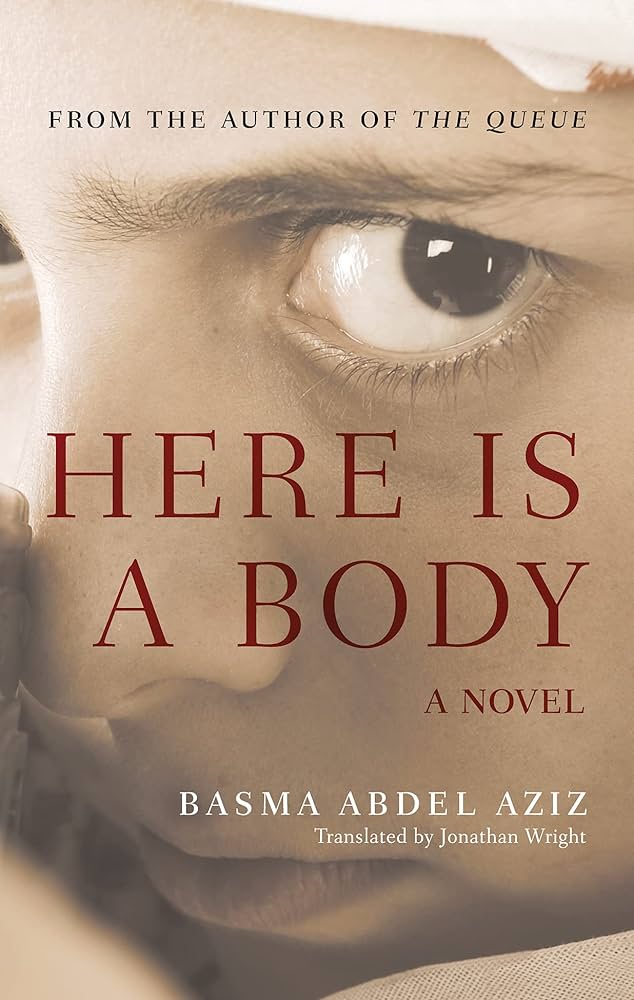
First thing to say is, this is an important novel, and reading it can deepen your understanding of what it would be like to live in a Middle Eastern country where democratic rights are crushed by military/state power. It conveys how the Islamic religious terrain is fought over by both sides in this battle, and shows how if you’re an individual who wants to be part of an active opposition to tyranny and supports human rights, you could be forced to align yourself with groups that contain elements of extreme religious views. Giving a very real context to this dilemma, the novel is set in a thinly veiled version of Egypt at the time of the military crackdown on the short-lived post Arab Spring government of Mohamed Morsi and the Muslim Brotherhood. However, you can easily imagine it applying to Syrian opposition to the dictator Bashar El Assad, or Palestinian resistance to Israeli oppression and massacres in Gaza.
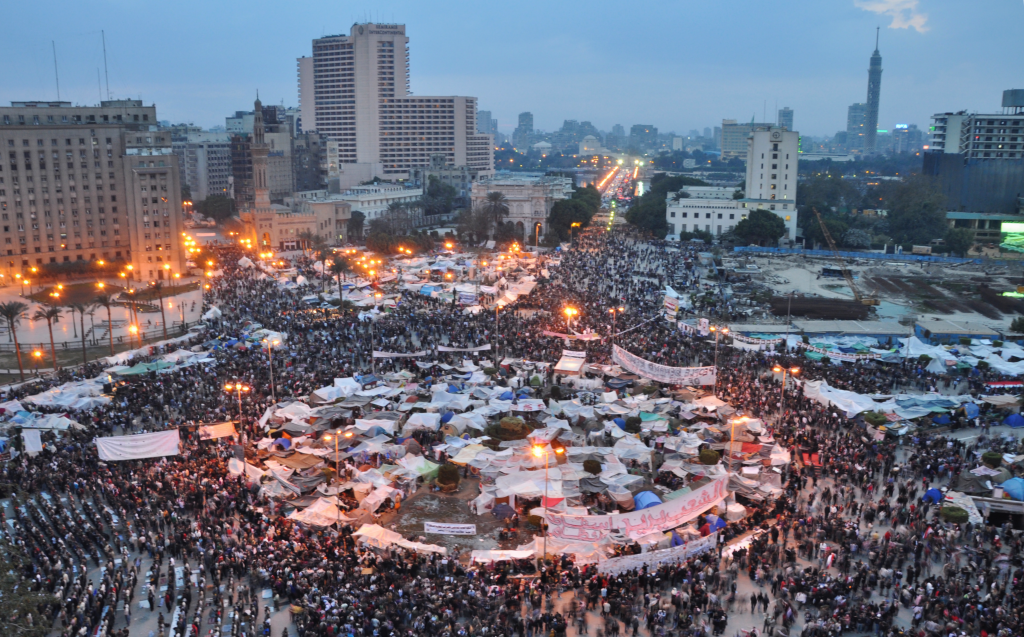
However it’s all very well having an ‘important’ novel that doesn’t work as a narrative, and that’s certainly not the case with Here is a Body. Like with The Queue (her first novel) Abdel Aziz manages to tie together the lives of a diverse cast of characters. In fact, the breadth of her canvas is even wider in this later novel. One of the main narrators is a homeless ‘street kid’, Rabie, who in the novel’s opening is part of a gang brutally rounded up by the military, which uses Islam to help indoctrinate and train the kids to take part in the state’s program of first discrediting and later savagely repressing the opposition. By alternating between Rabie’s account of his life in the training camp, and the lives of the protestors at the sit-in in ‘The Space’, Abdel Aziz creates a constant tension, as you sense that Rabie and the other boys are being groomed to ultimately crush the protestors.
One thing I noticed, which is picked up on by another reviewer, is that Rabie and the other boys frequently speak in what seems quite an elevated linguistic register. It contrasts a lot with the kind of language used in another novel about street kids that I recently read, Pasolini’s Boys Alive, translated from the Italian Ragazzi di Vita by Tim Parks. This is full of dialect and swearing in a way that would be similar to how a group of street kids might speak in Scotland/UK. According to the Arabic speaking reviewer, Jonathan Wright’s translation is accurately recreating a somewhat unlikely ‘standard Arabic’ used by the boys in Abdel Aziz’s original. I wondered if this makes the novel less authentic. On the other hand, throughout his time in the camp Rabie has been exposed to a high register Arabic as the boys are lectured by military and religious leaders with the aim of indoctrinating them. So it’s conceivable that this has led him to adopt a standard version of the language, at the same time as becoming an instrument of state oppression.
Ultimately, a sense that some of the street kids are aware that they have been exploited to serve the interests of power is one of the few chinks of light at the end of a grim account of the tyrannical force of the state. Abdel Aziz, a psychologist as well as a novelist and poet, shows how individuals, both victims and perpetrators, might emerge scarred but still surviving their involvement in this stand-off between ruthless power and popular protest.
 T.Y. Garner Writer
This sounds like such an interesting book! In December I read The Other Hand by Chris Cleave which gave me another perspective on immigration – it follows a young Nigerian girl and her journey to the UK. Really thought provoking but I would read trigger warnings before reading it as it touches on some explicit topics. Hope you have a great day!
LikeLiked by 1 person
Thank you Louise! I’ll try to check out The Other Hand, it sounds interesting
LikeLiked by 1 person